
What Sophie Cunningham Actually Said on WNBA Family Planning and IVF?

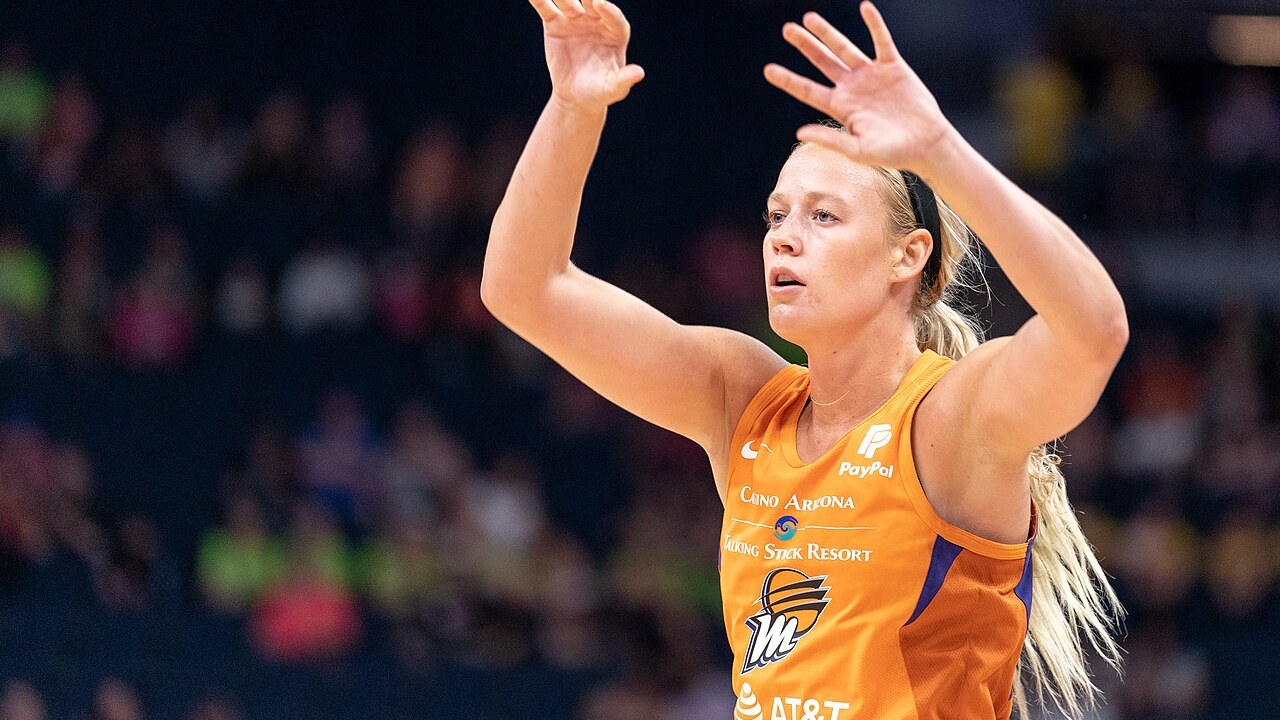
In short What did Sophie Cunningham say about WNBA family planning? The Indiana Fever guard discussed reciprocal IVF, teammates' experiences and how new league benefits support players starting families. Here's what she said.
Sophie Cunningham says WNBA players in same-sex relationships can start families with one partner providing the egg and the other carrying the pregnancy — and she's glad the league now protects their paychecks when they do. The Indiana Fever guard made the comments on Theo Von's This Past Weekend podcast, released October 28, 2026, offering a rare, plain-spoken look at how players actually think about family planning.
It wasn't an announcement about her own plans. Cunningham was describing what she'd seen among teammates and friends, and she was careful to say so. But in a league that has spent years being asked about pregnancy, motherhood and careers, her answers landed. So what did she actually mean, and why does the money part matter just as much as the medical part? From what I've seen, that's the half of the story people tend to skip.
What Sophie Cunningham Actually Said
The exchange was straightforward. "I think now you can have your partner carry your egg," Cunningham told Von, according to a report on the episode. She added: "A lot of people who were my teammates, this is strictly my experience, but their wives are typically the carriers, so they're not the ones having the baby." The key phrase there is "strictly my experience" — she wasn't claiming every player does this, just that she'd seen it. I think that honesty is why the clip travelled.
She also pushed back on the idea that pregnancy means the end of a career. "You can be pregnant, have your baby and come back. Now, it's hard on your body. People have done it," she said, as reported at the time. It's a balanced way to put it: honest about the physical toll, but clear that the old either/or choice isn't the only option anymore.
How Reciprocal IVF Works
For anyone unfamiliar, reciprocal IVF — sometimes called partner-assisted IVF — lets one partner provide the egg while the other carries the pregnancy. Eggs are retrieved, fertilised with donor sperm, and the resulting embryo is transferred to the other partner's uterus. CBS News has described it as a family-building option that's become more visible in recent years, and fertility clinics note that it lets both partners take a physical role in the process.
I like that this framing exists at all. For decades, the conversation about women athletes and motherhood basically boiled down to "when will she leave?" Now there are options that let both partners participate biologically, and a player can talk about them without whispering. A Guardian essay published in May 2026 put it plainly: one woman's egg, the other's womb, their baby. That's a real shift in how people talk about building a family.
Why the Money Mattered
Cunningham's bluntest line was about money. "It was like play or pay," she said of what she was told early in her career — and then: "I'm glad we fixed that." Under the WNBA's 2020 collective bargaining agreement, players began receiving full salary during maternity leave, replacing an earlier deal that guaranteed only half. The 2026–2032 CBA goes further: 100% of base salary for the period a player can't perform because of pregnancy, plus reimbursement of up to $20,000 per calendar year — $60,000 lifetime — for adoption, surrogacy, egg freezing and fertility treatment for eligible players and covered partners.
"It was like play or pay."
— Sophie Cunningham, on the old WNBA maternity system
That's not a small thing. For years, the unspoken rule was that a pregnancy could cost a player her roster spot or her paycheck. The league has since made it possible to plan a family without betting your livelihood on it. And there's precedent: Skylar Diggins-Smith played the whole 2018 season while pregnant, and Candace Parker was back on the court just 53 days after giving birth in 2009. If you want a reason to believe the system is changing, those two names do more work than any press release.
Her Own Family Story
Cunningham's interest in this topic isn't abstract. She grew up in Columbia, Missouri, in a house where sport was basically the family language: her father, Jim, played football at Missouri; her mother, Paula, competed in track and field; her sister, Lindsey, played basketball for the Tigers, according to a profile of her family. The family worked on a farm, and she has said that grounding shapes how she handles money and fame.
She's also been open about what she wants personally. In a July podcast appearance, she said she's single and looking for a partner who shares her Christian faith and will "lead our future kids" — with one cheeky requirement: he has to be taller than she is. At 6-foot-1, I like that she says this with a straight face. She's spoken about family, faith and future in the same breath for years, so this wasn't a one-off answer designed for a headline.
Cunningham is an unrestricted free agent after averaging 7.9 points and 41.9% from three in 43 games for Indiana, according to USA Today's offseason reporting, and she's headed to the new Project B league in January. Her offseason has also included a Maxim cover, a podcast and public musings about one day becoming WNBA commissioner. Whatever happens with her next contract, the broader point stands: the league has built actual infrastructure around players who want both a career and a family. That's the part worth remembering — not the gossip, but the fact that "play or pay" is no longer the deal.
Comments (0)