
Wicker Movie Ending Explained: What Happens to the Fisherwoman and Her Wicker Husband?

In short A spoiler-heavy breakdown of Wicker movie's ending, from the Wicker Baby lie to the final escape, and what the Fisherwoman's choice really means.
Wicker looks like a strange romantic fable on the surface: a lonely outsider asks for a husband made from woven wood, and somehow gets the real thing. But the movie’s ending is where its bite really shows. What starts as an oddball love story turns into a sharp look at jealousy, self-worth, and how easily people can be talked out of their own happiness. If the final stretch left you staring at the screen, here’s what actually happens, why it matters, and what the Fisherwoman’s last decision says about the whole film.
The Setup: A Village Built on Small Lives and Smaller Minds
The story unfolds in a cramped medieval village where everyone is defined by their role. Men are known by what they do, women by who they’re attached to, and marriage feels less like romance than social control. The Fisherwoman lives on the edge of that world, literally and emotionally. She’s mocked, dismissed, and treated like a problem because she refuses to play by the village’s rules.
After one humiliation too many, she makes a request that sounds like a joke: she asks the local Basket Weaver to make her a husband. It’s a defiant, sarcastic move, but it also reveals something tender underneath. For all her toughness, she wants connection. She just doesn’t trust the version of love her community offers.
How the Wicker Husband Changes Everything
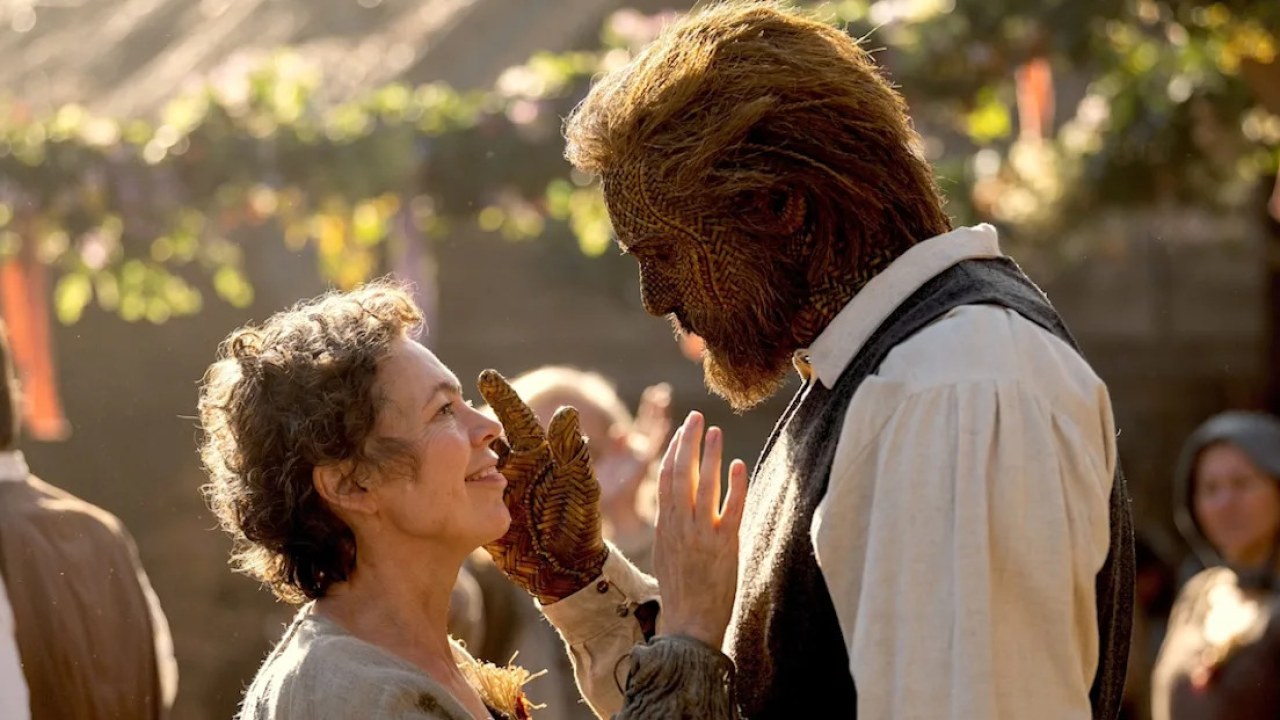
When the Wicker Husband arrives, the movie doesn’t treat him like a horror-movie monster or a cheap gag. He’s gentle, attentive, and completely devoted to the Fisherwoman. He listens. He helps. He treats her as a full person, not a role to manage. Their relationship quickly becomes the most alive thing in the village, and that’s exactly why it causes trouble.
The other couples can’t ignore the contrast. The wives see a partner who actually cares, and the husbands see a mirror they don’t like. Instead of questioning their own behavior, the village does what insecure communities always do: it looks for a way to tear the happy thing down.
The Lie That Sets the Ending in Motion
The Tailor’s Wife is the engine of that destruction. She’s smart, frustrated, and trapped in a marriage that gives her status but no freedom. Watching the Fisherwoman find real affection makes her own life feel unbearable. Rather than change it, she chooses sabotage.
Her opportunity comes through the Wicker Baby. After a tragedy leaves another woman grieving, the Basket Weaver creates a woven child. The Tailor’s Wife twists that situation into a weapon, planting the idea that the Wicker Husband has been unfaithful and that the baby is proof. It’s a cruel, effective lie because it targets the Fisherwoman’s deepest wound: the belief that she is not truly lovable.
The Fisherwoman has spent years building armor. Independence kept her alive, but it also taught her to expect disappointment. When doubt creeps in, it doesn’t take much for old fear to overpower new happiness. The accusation lands, emotions explode, and in the chaos the Wicker Husband is set on fire. He runs into the dark, and for a moment it feels like the village has won.
The Basket Weaver’s Reveal and the Real Twist
The key turning point isn’t just that the Wicker Husband survives. It’s what the Fisherwoman learns while he’s gone. The Wicker Baby was never evidence of betrayal; it was born from someone else’s grief. The story the Tailor’s Wife sold was convenient, not true. More importantly, the Basket Weaver makes it clear that the Wicker Husband’s love wasn’t a mechanical trick or an empty commission. He chose the Fisherwoman.
That reveal reframes the whole movie. The question was never whether a wicker man could love. The question was whether the Fisherwoman could believe she deserved love, even when fear gave her an excuse to retreat. Her anger and heartbreak make sense, but the film doesn’t let her off the hook completely. She has to face the fact that the village didn’t destroy her happiness alone — she helped hand it over.
The Final Scene: A Happy Ending With Teeth
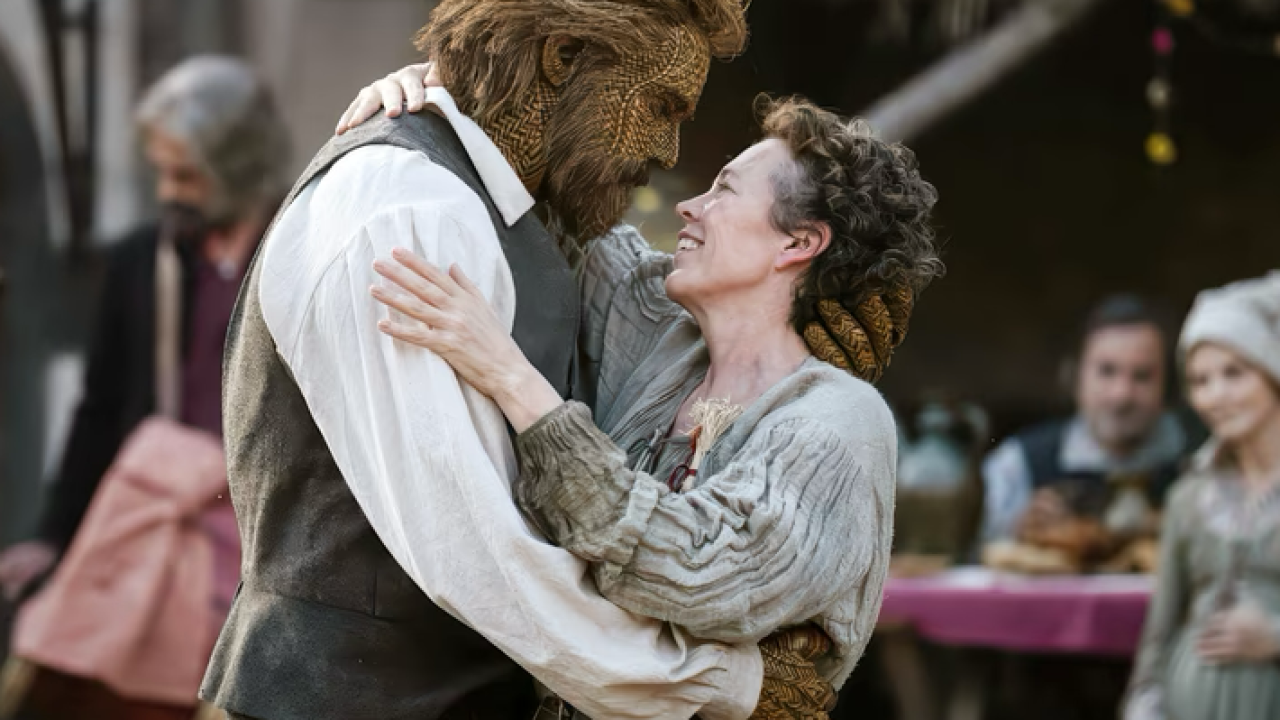
When the Wicker Husband is repaired and returns, the reunion is warm, but it isn’t a simple reset. He’s been damaged. He won’t last forever in the same untouched way. That detail matters. The movie refuses to give the Fisherwoman a fantasy where love is safe, permanent, and risk-free. Instead, it gives her something harder and more honest: a chance to love again, knowing loss is possible.
The Basket Weaver’s last move adds the final sting. He offers the villagers a chance to bid for their own wicker spouse, exposing how shallow their desires really are. They don’t want partnership; they want convenience, control, and status. The prize they fight over turns out to be a grotesque punishment, a thorny Wicker Wife who gives them exactly the kind of relationship they deserve. While the village collapses under its own pettiness, the Fisherwoman, the Wicker Husband, and the Wicker Baby leave together.
What the Ending Really Means
The ending of Wicker works because it treats love as both beautiful and terrifying. The Fisherwoman’s journey isn’t about finding a perfect man; it’s about unlearning the idea that she has to stay closed off to survive. The Wicker Husband represents a kind of love that is steady and generous, but the movie’s real focus is her choice to accept it.
Love Doesn’t Fix the Past, but It Can Change the Future
The Fisherwoman’s isolation came from real pain. The film never pretends that a romance erases old wounds. What changes is her willingness to stop letting those wounds make every decision for her. By the end, she isn’t choosing love because it’s guaranteed. She’s choosing it because hiding has cost her enough.
The Village Is the Real Monster
For all the fairy-tale weirdness, the scariest force in Wicker is ordinary human cruelty. The villagers can’t stand a relationship they don’t control or understand. Their gossip, envy, and hypocrisy nearly destroy two people who found something genuine. The ending punishes that mindset, but it also makes a quieter point: communities built on rigid roles will always treat real intimacy like a threat.
The Wicker Baby Completes the Picture
Leaving with the Wicker Baby turns the couple’s escape into something bigger than romance. It suggests a chosen family, built from care rather than convention. The Fisherwoman doesn’t just get her husband back; she steps into a life where love is something she gives, protects, and believes in.
That’s why the final moments land. Wicker ends on hope, but not the cheap kind. It argues that love is worth the risk, even when people around you are desperate to prove it isn’t. The Fisherwoman walks away from the village not because everything is perfect, but because she finally understands that a hard, open life is better than a safe, lonely one.
Wicker (2026)
Comments (0)